Hai Phong expedites issuance of land use right certificates to religious and belief establishments
12/10/2025
In order to enhance the efficiency of land management, An Duong ward in Hai Phong city is expediting the issuance process of land use right certificates for religious and belief establishments within the locality.
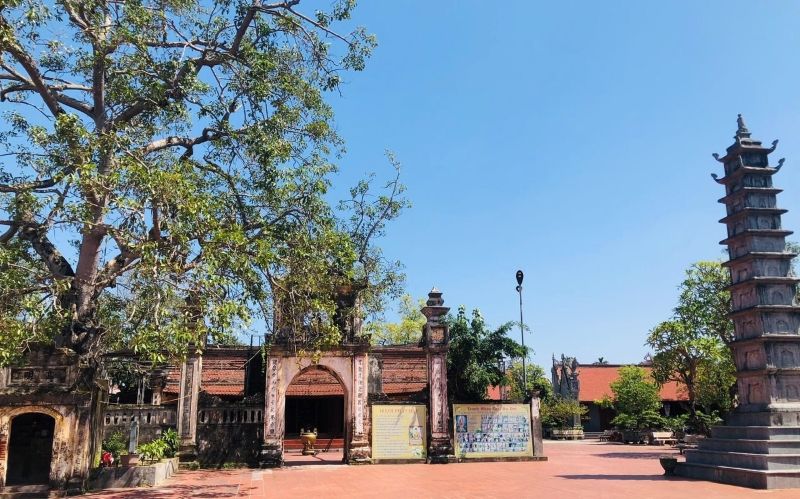
Trieu Tuong pagoda (also known as Do Nha pagoda) located in An Duong ward receives land use right certificate
Urgent review and inventory
Following the implementation of the two-tier local government system, An Duong ward now has 20 communal houses (including 6 national-level relics, 12 city-level relics, and 2 relics included in the inventory); 21 pagodas, 11 shrines, 7 temples, and 5 churches. These are structures of special historical, cultural, and spiritual value, closely intertwined with community life.
Upon review, the ward currently has 14 establishments that have been granted land use rights certificates, including 11 temples and 3 churches. The issuance of certificates to religious and belief establishments not only ensures legal land use rights but also enables these establishments to confidently manage, renovate, and invest in facilities, meeting the religious needs of the people.
The remaining 20 communal houses, 10 temples, and 2 churches are in the process of completing their land registration documents. In addition, there are 17 shrines and 8 temples that have not yet been granted land use rights certificates.
Furthermore, some religious establishments have only received partial land use certificates, such as Dieu Quang Pagoda in Doan Tien residential area. The pagoda has a portion of its land area of over 3,804m2 that has been granted a land use certificate, and the remaining 1,897m2 has not yet been issued a land use certificate.
Continue to overcome obstacles
In the context of increasing demand for the restoration and preservation of religious structures, having land use right certificates will create a solid legal framework for religious establishments to mobilize social resources and implement investment activities in accordance with state laws. Additionally, this will help local authorities effectively manage land related to religious and belief facilities, preserve and promote traditional cultural values.
Based on the requirements for land management and religious activities, An Duong Ward has identified one of its key priorities as expediting the issuance of land use rights certificates to all religious establishments in the area.
To complete the task of issuing land use right certificates to all religious and belief establishments in the area, An Duong ward continues to collaborate with relevant departments and agencies of the city to address outstanding legal issues. At the same time, it is coordinating and guiding religious and belief establishments in completing land cadastral records and preparing applications for land use right certificates in accordance with state laws.
However, according to the leaders of An Duong Ward People's Committee, there are still some difficulties in completing this task. These include the fact that some establishments have not yet completed all necessary documentation due to difficulties in determining boundaries and landmarks; the origin of the land is unclear due to long-standing traditional community use. These are all obstacles that require close coordination between the governments at all levels and religious establishments.
Therefore, along with the active involvement of local authorities and management agencies, the active cooperation of religious establishments is needed. Close coordination between wards, city departments, and agencies is also a key factor in resolving difficulties and working towards the goal of completing the issuance of land use right certificates for all religious and belief establishments in the area.
Linh Nguyen